
Oklahoma DUI Records
Oklahoma DUI records are public court documents you can search online or request in person at the district court where a case was filed. The state has 77 counties, and each one keeps its own DUI case files at the court clerk's office. Two free databases let you look up DUI records from any county. You can find party names, charges, case status, and hearing dates without paying a fee. For certified copies of DUI records or full case documents, you need to contact the court clerk in the right county. This page covers the main ways to search Oklahoma DUI records and what you can expect to find.
Oklahoma DUI Records Overview
Where to Search Oklahoma DUI Records
Oklahoma keeps DUI records at the district court level. Each of the 77 counties has a court clerk who maintains all criminal case files, and that includes DUI charges. The court clerk stores the full case record from the initial arrest filing through sentencing and any post-conviction actions. DUI cases show up as traffic violations with a TR case number prefix or as criminal misdemeanors with a CM prefix. It depends on how the charge was filed. Felony DUI cases carry a CF prefix. You can search these records for free through two state systems that cover every county in Oklahoma.
The Oklahoma State Courts Network (OSCN) is the official court records portal run by the state. It gives you free access to dockets from all 77 counties. You can search by party name, case number, attorney, or traffic citation number. OSCN shows case type, charges, hearing dates, and docket entries. Some filed documents are available for download at no cost. Records on OSCN typically go back to the late 1990s or early 2000s depending on which county you search. Recent filings may take 24 to 72 hours to show up after the clerk processes them.
The search is straightforward. Go to OSCN, pick a county, and type in the name you want to look up. The system pulls all matching cases for that person.
You can view the screenshot below to see what the OSCN search page looks like when you first load it.
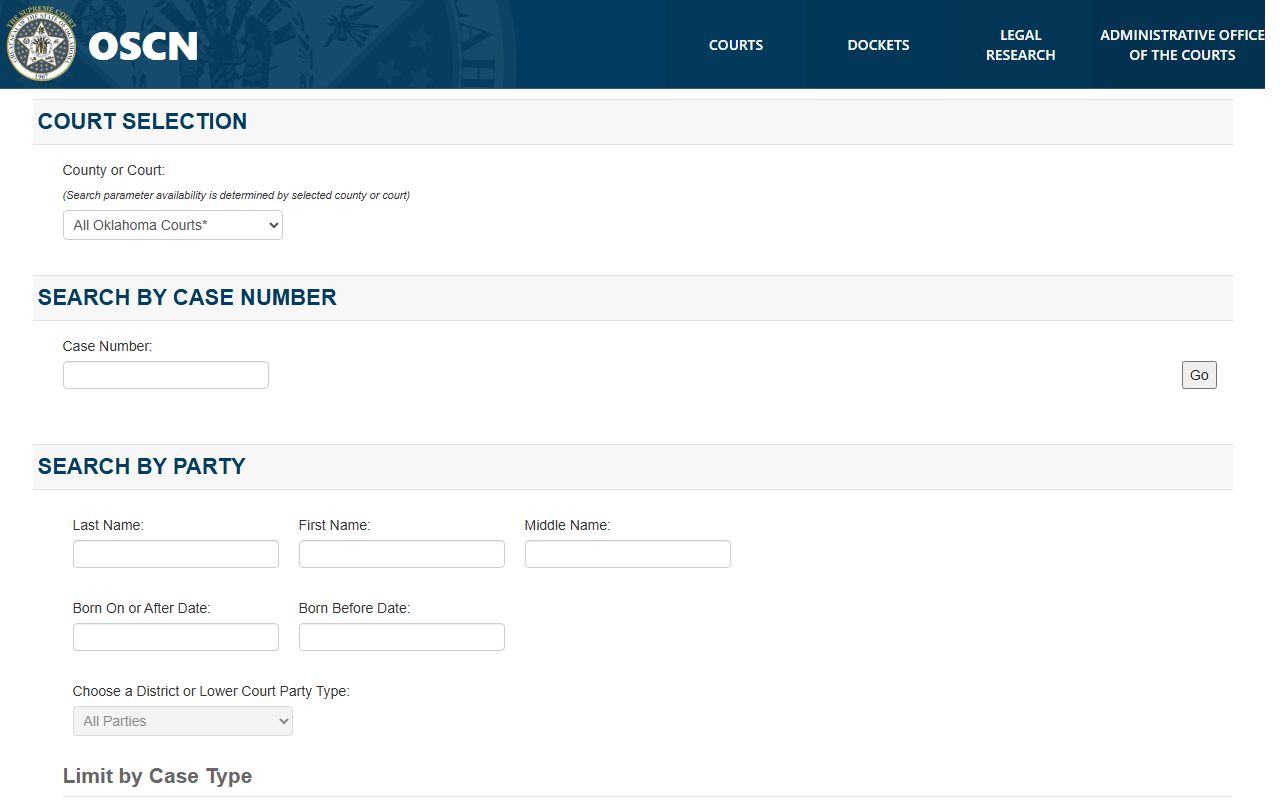
The OSCN homepage also links to court rules, fee schedules, and other resources that help with DUI records research across the state.
DUI Records on ODCR
On Demand Court Records (ODCR) is a second database that covers over 70 Oklahoma counties. It is run by KellPro, Inc. under contract with the state. ODCR works best for rural counties that may not have full records on OSCN. Basic searching on ODCR is free. You can look up cases by party name, case number, or filed date. The free tier shows full docket text and case financial details like bonds and fees. If you need scanned court documents, ODCR offers paid plans starting at $5 per month for advanced tools and going up to $55 per month for full document access across all counties.
ODCR also covers tribal court records from Cherokee Nation, Choctaw Nation, and other tribal courts. This matters for DUI records because tribal courts have separate jurisdiction on reservation lands in Oklahoma. If an arrest happened on tribal land, the case may be in a tribal court system rather than the state district court.
The ODCR portal below shows the main search interface for Oklahoma DUI records and court case lookups.
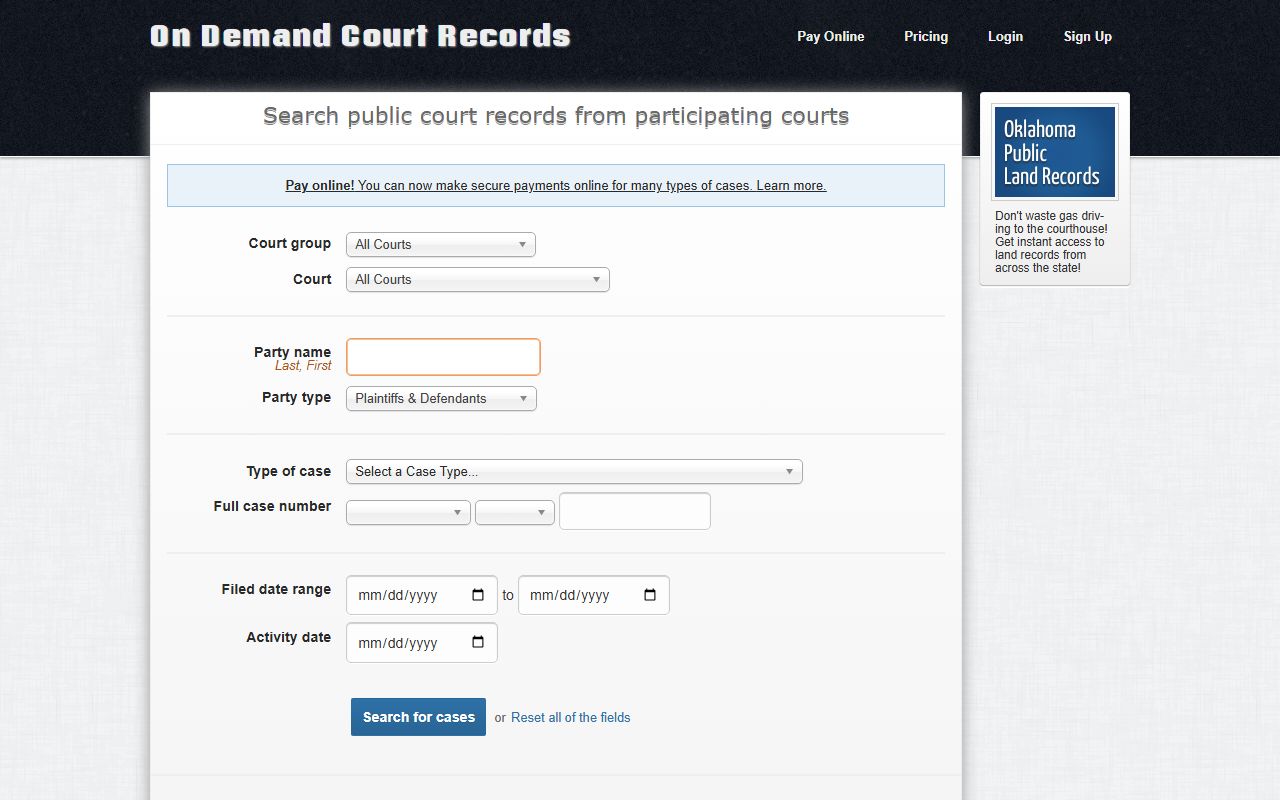
ODCR records are considered unofficial copies. If you need a certified copy for legal use, get it from the court clerk where the case was filed.
Note: OSCN and ODCR do not include municipal court cases from most cities. For city-level DUI records in places like Oklahoma City or Tulsa, check those municipal courts directly.
Oklahoma DUI Laws and Penalties
Oklahoma's main DUI law is 47 O.S. § 11-902. Under this statute, a person commits DUI when they drive or have actual physical control of a vehicle while their blood alcohol concentration is .08 or higher within two hours of arrest. The law also covers anyone under the influence of a Schedule I controlled substance or any combination of alcohol and drugs that makes safe driving impossible. Oklahoma recognizes "Actual Physical Control" (APC) as the same as driving for DUI purposes. That means you can face DUI charges while sitting in a parked car if the keys are within reach.
A first DUI offense is a misdemeanor. The penalty ranges from 10 days to one year in jail and fines up to $1,000. The court will revoke your license for 180 days. An ignition interlock device is required. These DUI records stay in the court system and are searchable on OSCN and ODCR. Aggravated DUI with a BAC of .15 or higher triggers harsher penalties including mandatory inpatient treatment for 30 days and 480 hours of community service.
Second and later DUI convictions within a 10-year lookback period are felonies under Oklahoma law. Felony DUI records carry prison time of 1 to 5 years and fines up to $2,500. The lookback runs from the date you completed any prior sentence or deferred judgment, not from the date of the offense itself. Senate Bill 54, effective November 1, 2025, expands felony DUI provisions to cover certain first offenses with aggravating factors.
Implied consent is another key part of Oklahoma DUI law. Under 47 O.S. § 751, every driver in the state automatically consents to chemical testing when they operate a vehicle. Refusing a breath or blood test results in automatic license suspension. Drivers have just 15 days from the date of arrest to request an administrative hearing with the Department of Public Safety to contest the suspension. DUI records from these administrative actions are separate from the criminal court case.
The DPS handles driver license records, administrative hearings, and ignition interlock program information for Oklahoma DUI cases.
How to Get Copies of DUI Records
Getting copies of Oklahoma DUI records starts at the court clerk's office in the county where the case was filed. Every county has one. The clerk keeps the full case file with all documents from arrest through final disposition. You can visit in person during business hours and ask for copies. Bring the case number if you have it, or the full name and approximate date of the arrest. Court clerks charge $1.00 for the first page and $0.50 for each additional page under 28 O.S. § 31. Certified copies run $1.00 per page with the court seal.
You can also request DUI records by mail. Send a written request to the court clerk with the case details, a check or money order for the copy fees, and a self-addressed stamped envelope. Mail requests take a week or two depending on the court's workload. In-person requests at most courthouses are handled the same day.
The Oklahoma State Bureau of Investigation (OSBI) offers criminal history searches through its CHIRP portal. A name-based search costs $15 and includes DUI arrests and convictions statewide. OSBI records are broader than court records because they pull from law enforcement agencies across all 77 counties. Fingerprint-based searches cost $19 and give more accurate results.
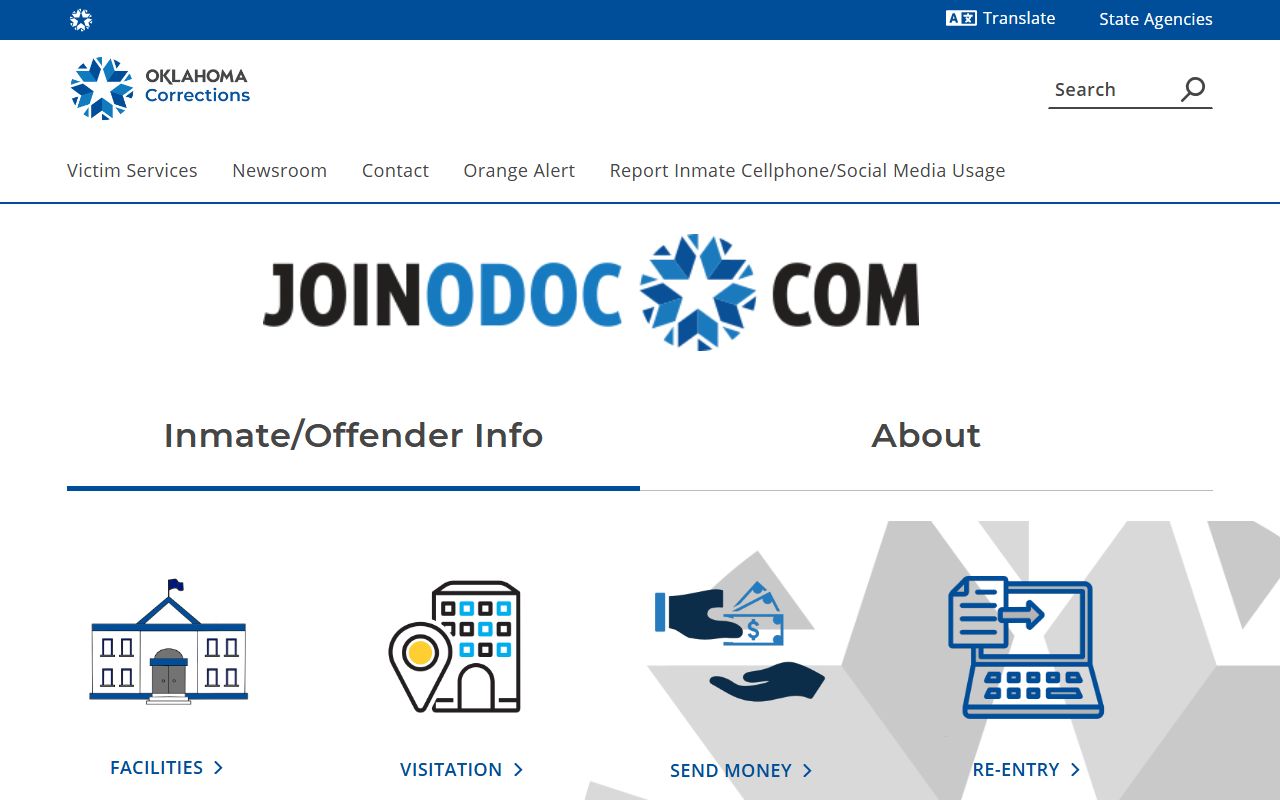
The Department of Corrections offender search helps locate individuals currently in state custody for felony DUI convictions. It shows facility location, sentence details, and projected release dates.
Oklahoma DUI Records and Court Structure
Oklahoma has a layered court system that affects where DUI records end up. District courts handle most DUI cases. Each of the 77 counties is its own judicial district with elected court clerks who manage records. Misdemeanor DUI cases, first-offense charges, and most traffic-related DUI filings go through the district court. Felony DUI cases for second or subsequent offenses also land in district court with harsher penalties.
Municipal courts are different. Oklahoma City and Tulsa both operate Municipal Criminal Courts of Record, which is important for DUI records. Convictions in these courts can enhance future DUI charges to felonies under 47 O.S. § 11-902. Most other city municipal courts are not courts of record. Their DUI records sit in separate systems that OSCN and ODCR do not cover. You need to check with each city court directly for those cases.
The Oklahoma Supreme Court sets the rules for how court records are handled online. Rule 2.6 governs electronic filing and public access to court records through OSCN. It requires that personal identifiers like Social Security numbers and financial account numbers be redacted from public view. If personal information ends up in a filed document, it becomes a public record as filed. The responsibility for redaction falls on whoever files the document, not the court clerk.
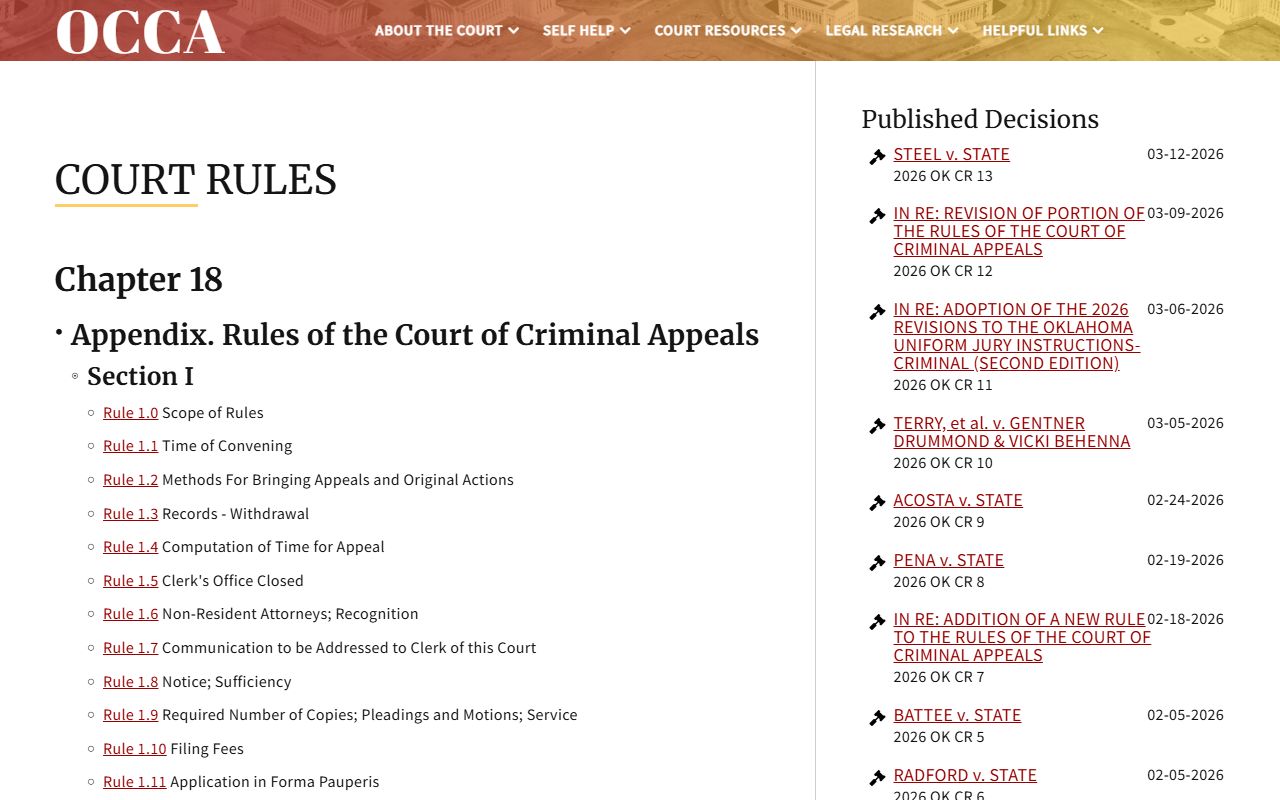
The Supreme Court rules page above outlines how DUI records and other court documents are made available to the public through online systems.
Public Access to DUI Records in Oklahoma
Oklahoma DUI records are public. The Oklahoma Open Records Act under Title 51 O.S. § 24A.1 says all government records are presumed open to any person for inspection during business hours. You do not need to be a party to the case. You do not need to give a reason for your request. The law requires prompt and reasonable access. Fees for copies are limited to actual reproduction costs.
There are limits on what you can get. Juvenile DUI records are sealed. Expunged records are legally erased and will not show up in searches. Cases that a judge has ordered sealed require a court order to access. Mental health records tied to DUI cases are protected. But the vast majority of adult DUI records in Oklahoma are fully open to public view.
The VINE (Victim Information and Notification Everyday) system provides a different type of DUI records access. It lets victims and the public track offender custody status. You can sign up for alerts when someone arrested for DUI is released, transferred, or escapes from custody. The service is free and confidential.
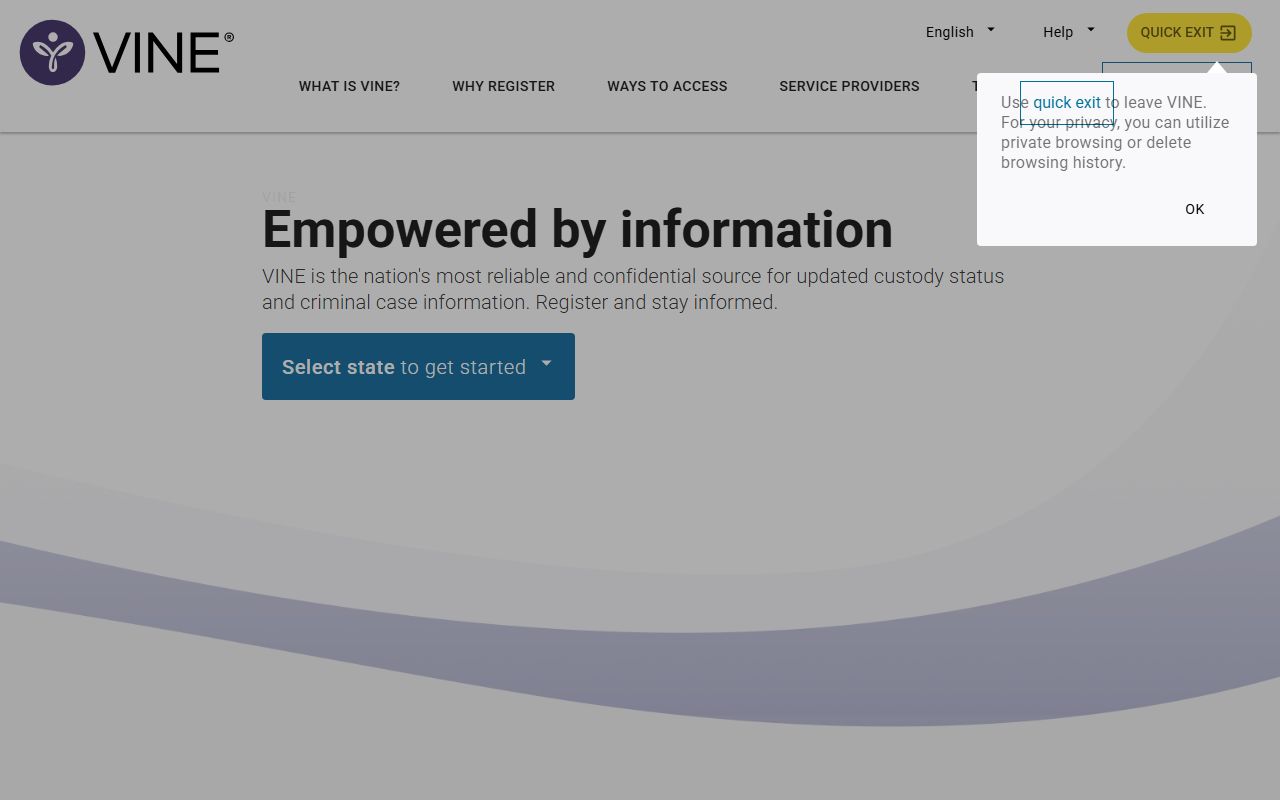
VINE covers offenders in county jails, state prisons, and community corrections statewide. Registration is available online, by phone, or through victim advocate offices.
Legal Aid Services of Oklahoma can help low-income residents with questions about DUI records access, record clearing, and expungement. They provide free civil legal assistance and referrals to defense attorneys for criminal matters. Their statewide hotline connects people with the right resources.

Legal Aid also runs workshops on expungement for people who want to clear old DUI arrests or convictions from their records.
Note: Child endangerment charges under 21 O.S. § 852.1 apply when someone drives impaired with a child under 18 in the vehicle. These charges double the fine for the underlying DUI violation and create additional records in the court system.
DWI and Related Oklahoma Records
Oklahoma distinguishes between DUI and DWI. Driving While Impaired (DWI) under 47 O.S. § 761 covers drivers with a BAC between .06 and .07 who show signs of impairment. DWI carries lesser penalties than DUI but still generates court records you can search. For drivers under 21, Oklahoma follows a zero-tolerance policy. Any detectable amount of alcohol triggers charges under 47 O.S. § 11-906.4. Commercial drivers face a stricter BAC limit of .04 while operating commercial vehicles.
DUI resulting in great bodily injury is a separate felony under 47 O.S. § 11-904. It carries 1 to 10 years in prison and fines up to $5,000. These cases create extensive court records including medical evidence, accident reconstruction reports, and victim impact statements. All of these documents become part of the public case file at the court clerk's office.
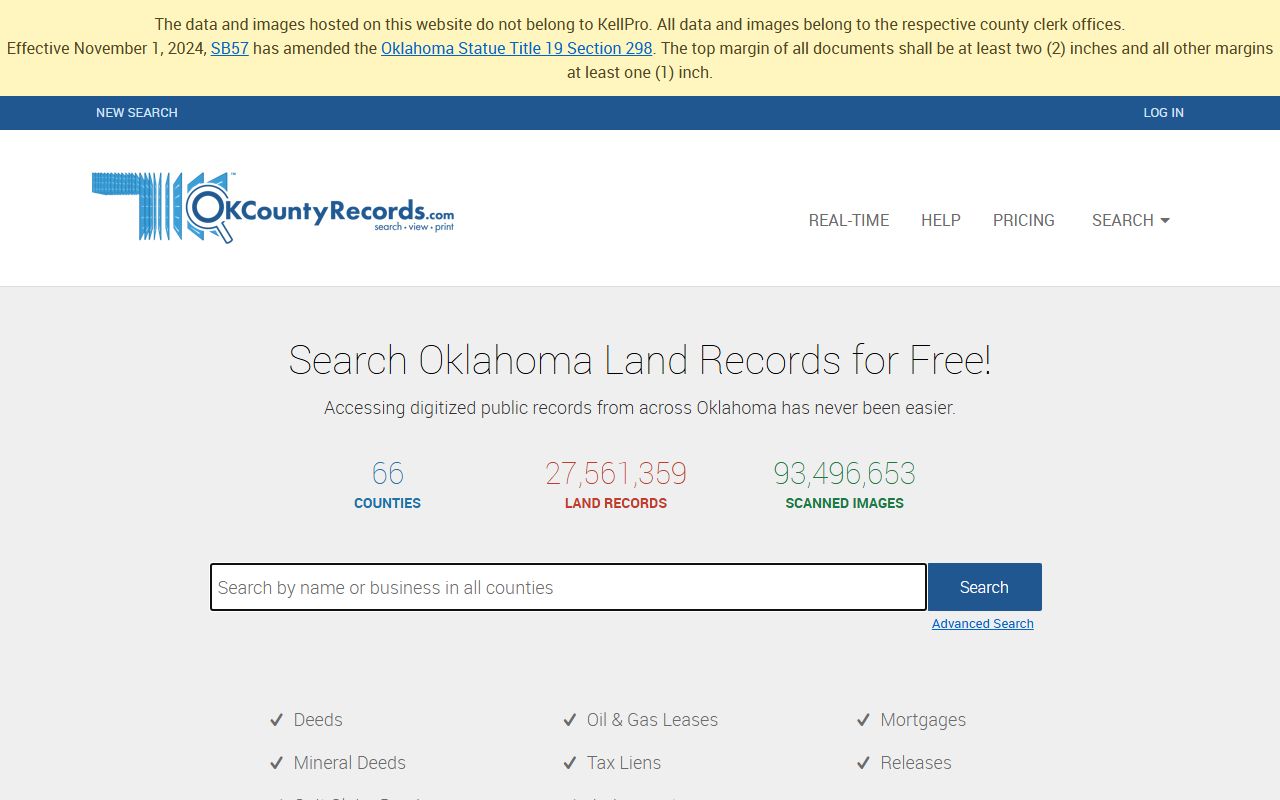
OKCountyRecords.com provides access to county clerk land records from all 77 counties. While focused on property records, it can help locate liens or judgments that sometimes result from DUI cases involving property damage.
Browse Oklahoma DUI Records by County
Each of Oklahoma's 77 counties has its own district court that handles DUI cases. Pick a county below to find local court clerk contact info, search tools, and DUI records resources for that area.
DUI Records in Major Oklahoma Cities
Residents of major cities file DUI cases at the district court in their county or at the municipal court depending on the charge. Pick a city below to find out where to search for DUI records in that area.